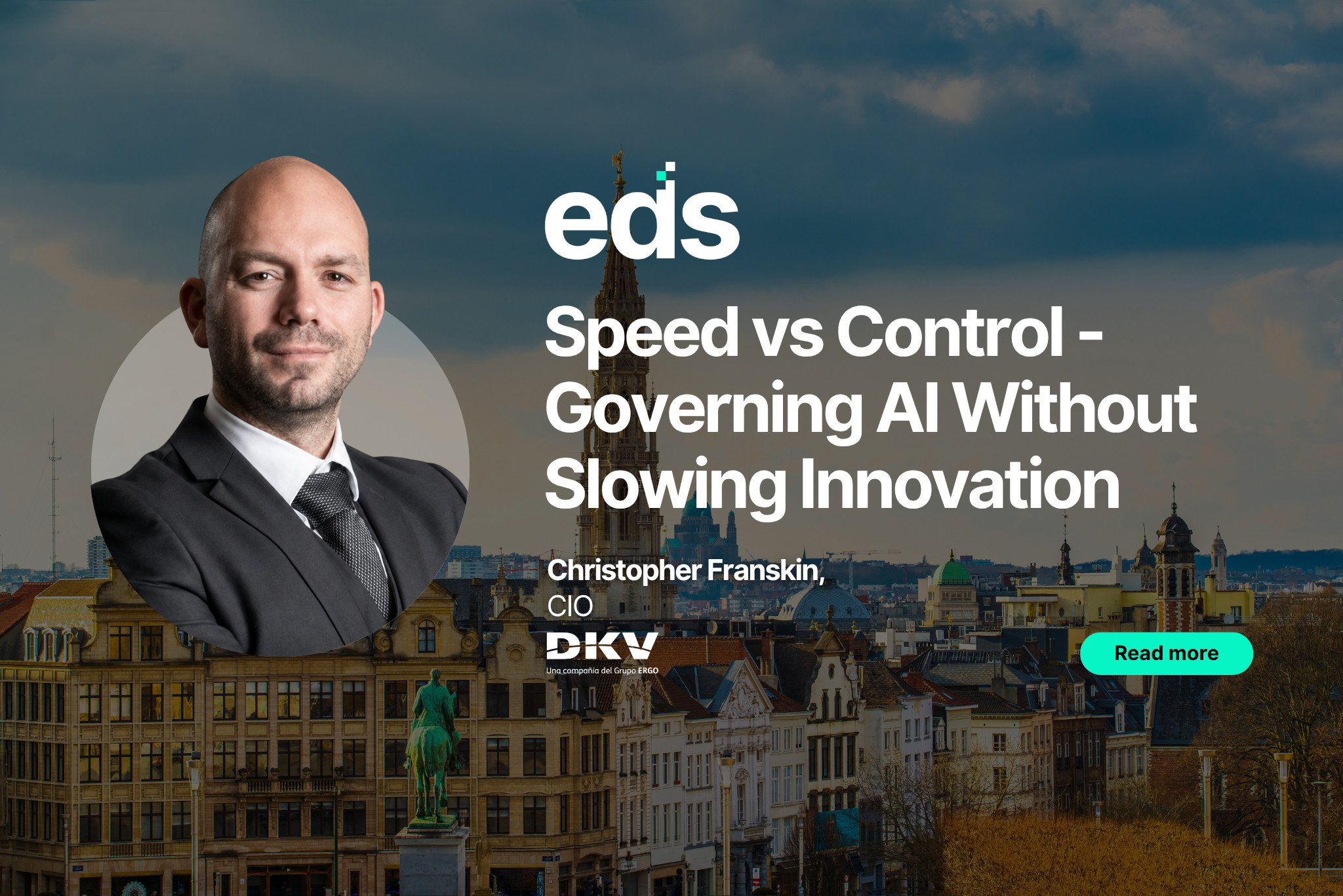
By Christopher Franskin, CIO, DKV Belgium
What Will 2030 Tell Us About the AI Choices We Make Today?
By 2030, AI will likely no longer be discussed as a separate technology initiative. It will be embedded in how we work, make decisions, serve customers and run our organisations.
The question for leaders in 2026 is therefore not whether AI will transform our businesses, but how we want to shape that transformation.
The opportunity goes far beyond productivity. AI can give people more time for judgment, creativity, collaboration and solving problems that genuinely require human intelligence.
But greater capability also brings greater responsibility. Security, privacy, resilience, accountability and regulatory expectations cannot be added after innovation has happened.
At the same time, trying to eliminate every risk before moving creates another risk: becoming too slow to learn, adapt and compete.
The leadership challenge is therefore not speed or control, but finding the right balance between the two.
Governance should create trusted boundaries within which people can experiment and innovate, not become a mechanism that stops innovation.
We also need to remain conscious that technology should serve people, rather than forcing people to continuously adapt to technology.
Perhaps the most useful perspective is to imagine ourselves in 2030 looking back at the decisions we are making today.
Will we wish we had moved faster, governed differently, taken more opportunities, or paid more attention to the human consequences?
The choices we make in 2026 will determine that answer.
If you’re interested in exploring what Speed vs Control – Governing AI Without Slowing Innovation means for your organisation – and how cybersecurity leaders can stay ahead of it – we invite you to join the conversation. To learn more or take part, please RSVP below.